
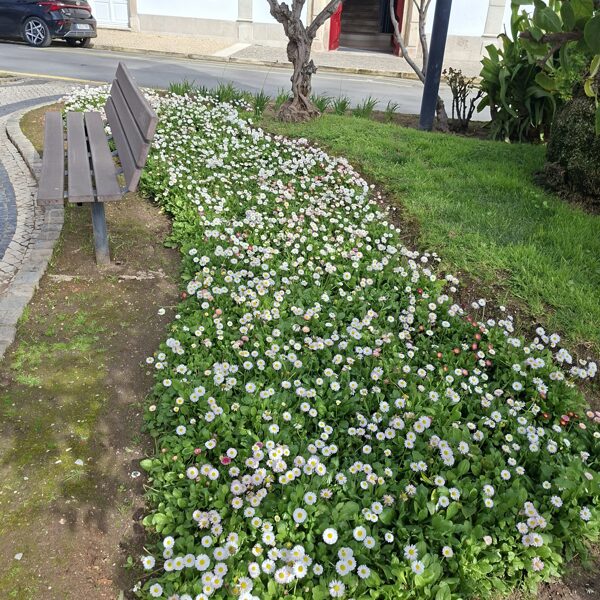
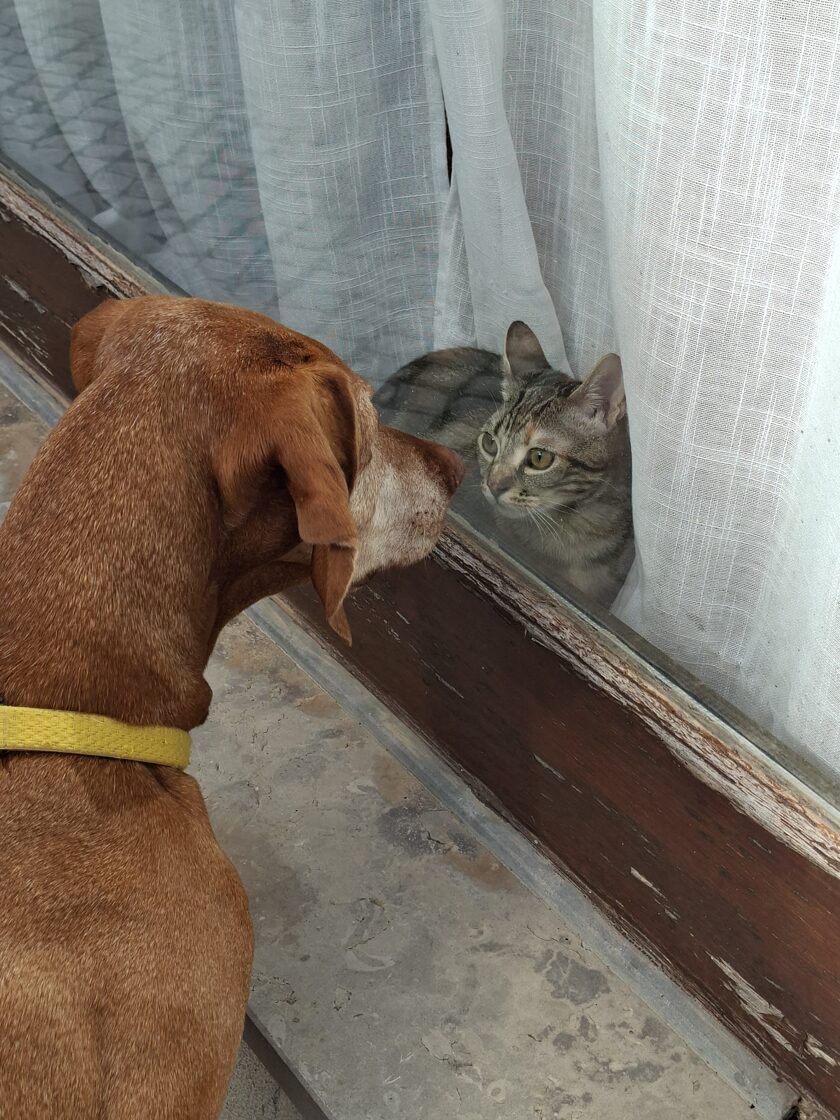
In the morning I took the dogs for a quick walk in the nearby forest. Our house is in a really good spot, you can easily get down to the ocean shore and to the forest as well.
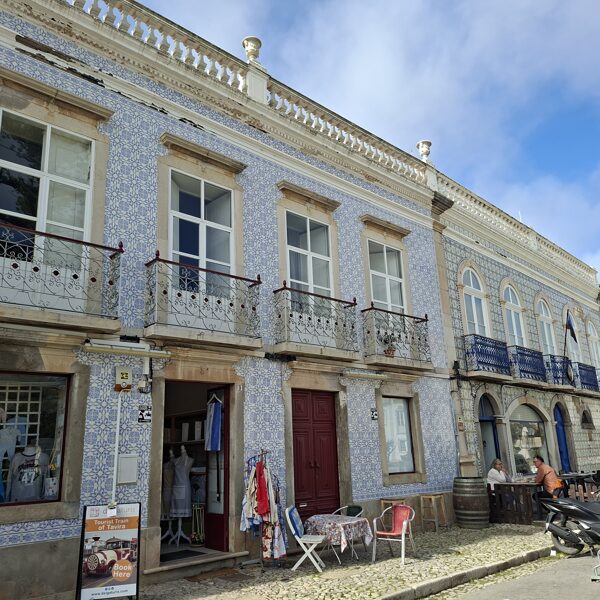
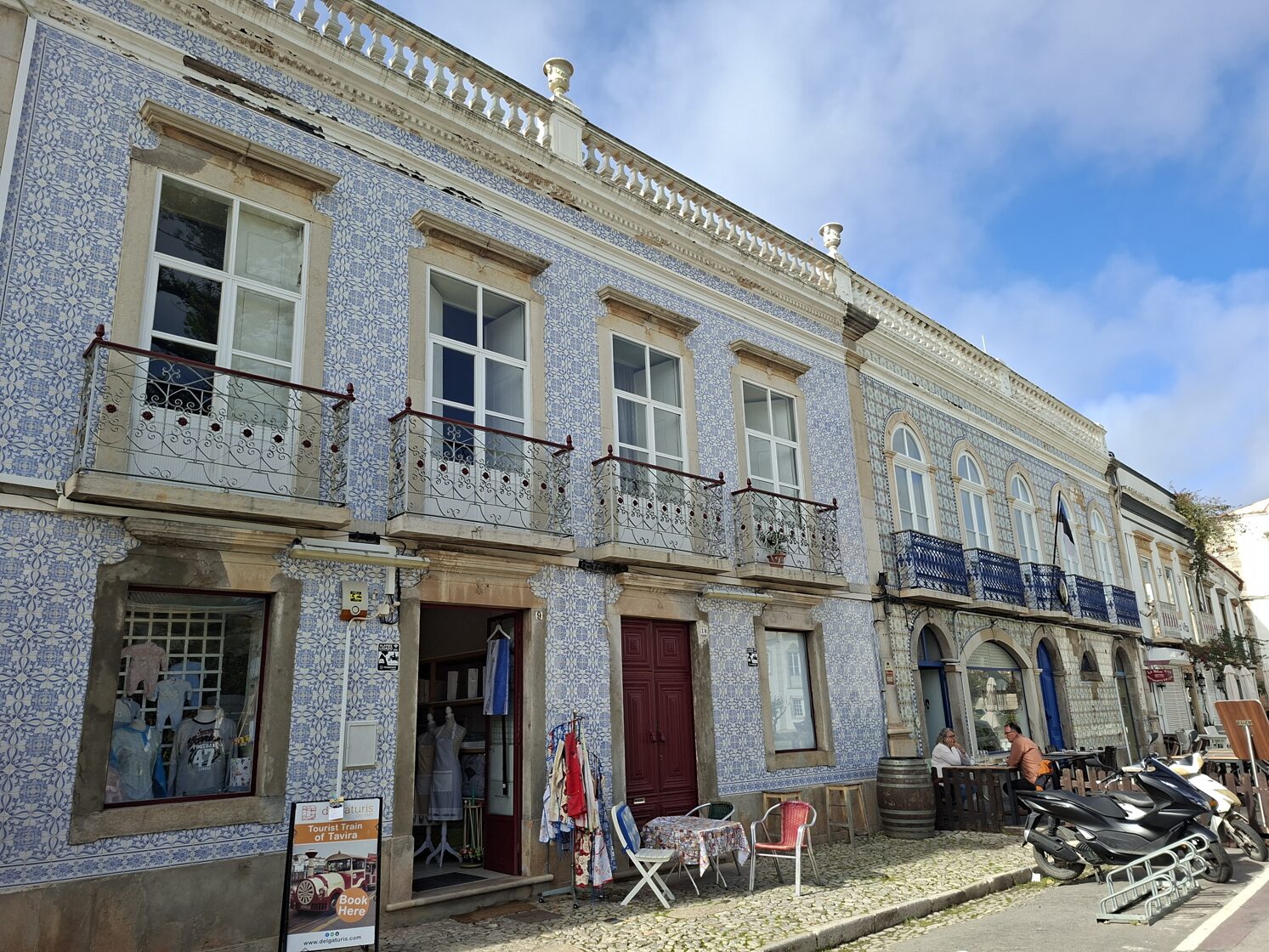
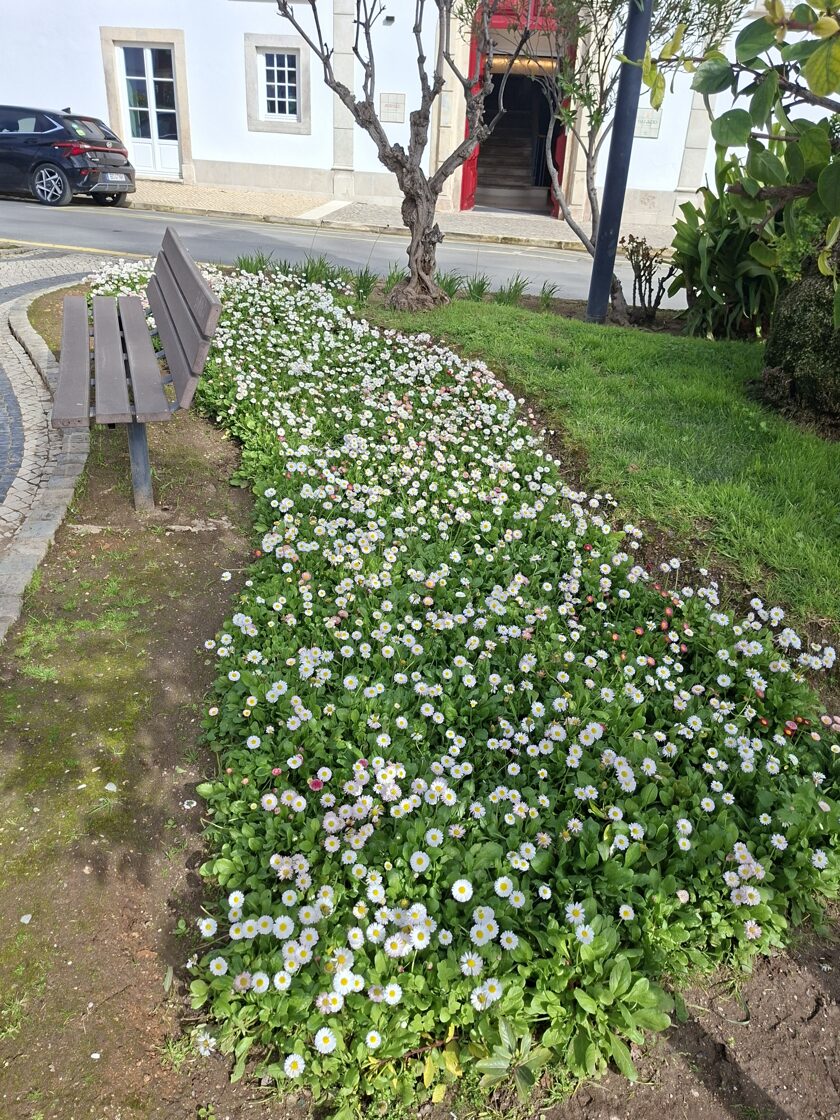
After breakfast, which is quite late here because my friends like to sleep in, we went to the town of Tavira. It lies on a riverbank, a very lovely little place. It’s like Italy or Croatia: if there are 3 square meters of street frontage, they’ll already put out two tables with four chairs and you can have coffee, a soft drink, a beer, wine, or something to eat. And of course chat and watch the people walking by.
We also took a nice long walk, then we caught the smell of Indian food in the air and, following our noses, we found the place. I love their spicy food! Luckily, the others do too. We tucked the dogs under the table so they wouldn’t be in the waiters’ way and gave ourselves over to pleasure: cold beer in the sunshine. The food was brilliant and the price was perfectly reasonable.
Slowly we walked back to the car; along the way I picked up a pair of earrings, a very nice warm scarf in a beautiful color, and a “Portugal” fridge magnet.
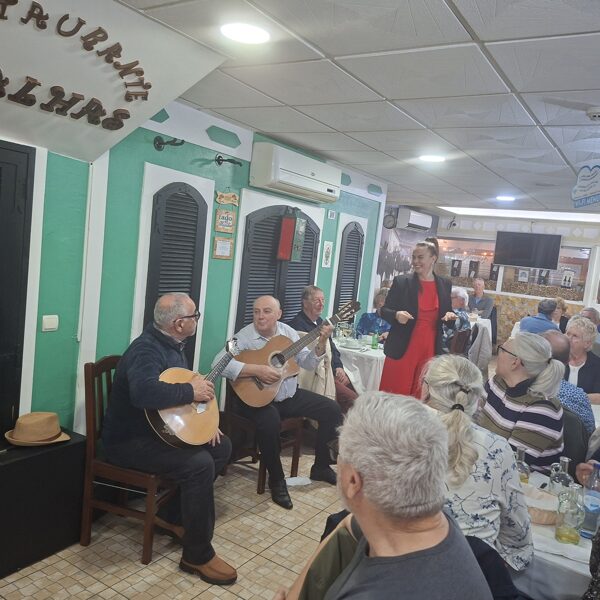
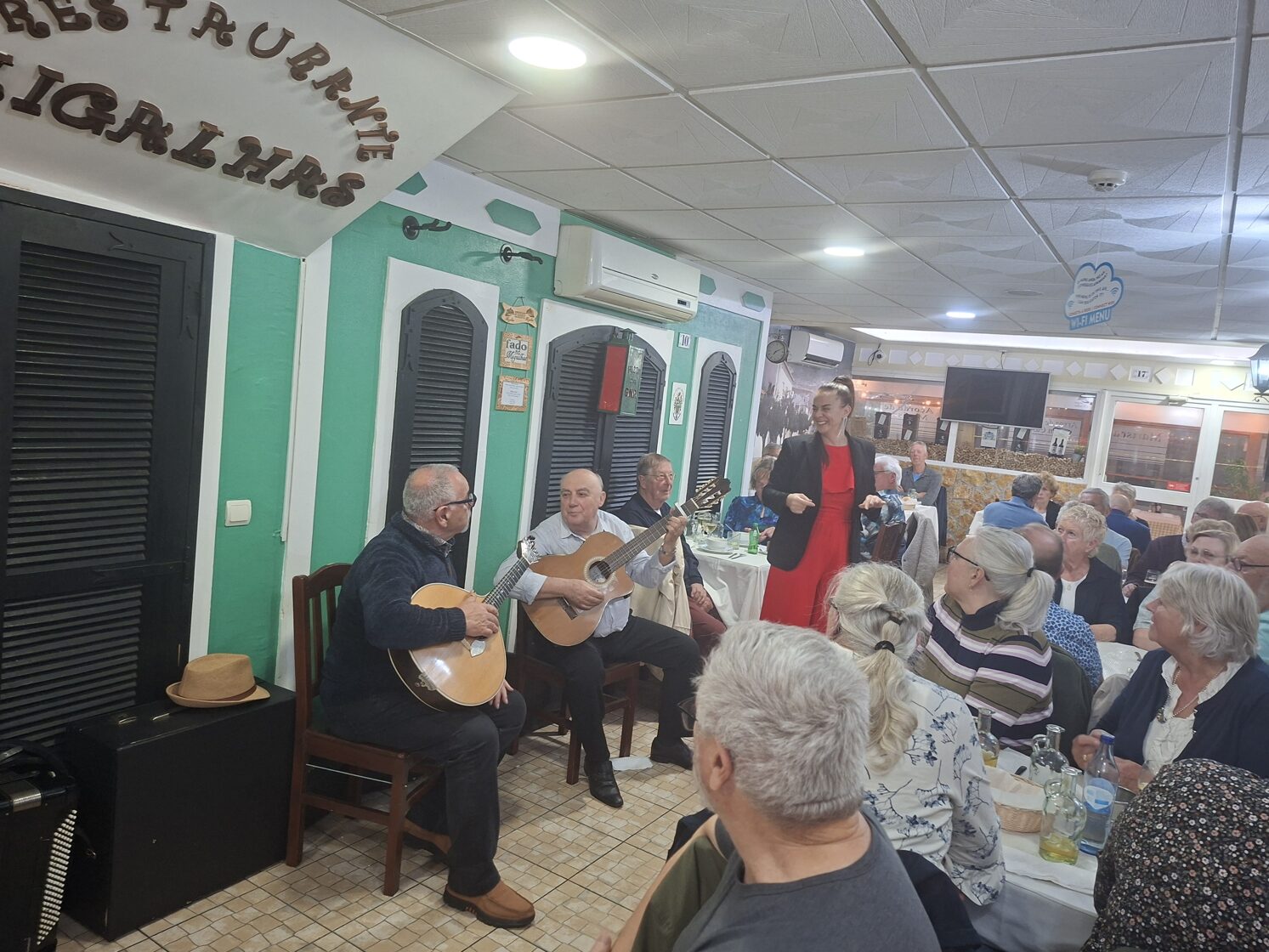
In the afternoon there were a few hours of “free time,” and in the evening we went to dinner at a restaurant where there’s a live Fado concert on Tuesdays.
“Fado (“fate, destiny”) is a musical genre whose origins can be traced back to the 1820s in Portugal’s capital, Lisbon, but it probably has much earlier roots.
Although its origins are difficult to trace, today fado is generally regarded simply as a song form that can be about anything, but it must follow a certain traditional structure. Popular belief holds that fado is a musical genre characterized by sad melodies and lyrics, often about the sea or the lives of the poor, and in which a sense of resignation, fate, and melancholy flows. This is roughly described by the Portuguese word saudade, that is, longing, which symbolizes the feeling of loss (a final, irreparable loss and the lifelong damage resulting from it). This is similar to the character of several musical genres from former Portuguese colonies, such as morna from Cape Verde, which may be historically connected to early forms of fado and has preserved its rhythmic heritage. This connection can also be found in the music of the historical Portuguese urban and maritime proletariat (sailors, bohemians, dockworkers, prostitutes, tavern-goers, port traders, fishmongers, and other working-class people) in the Brazilian modinha and Indonesian kroncong music as well, although these musical genres later each developed their own independent traditions.
The band consisted of several female singers, one male singer, and two guitarists. It was fantastic! They were unbelievably talented; we enjoyed it very much. For dinner we had a very delicious cream soup, a huge fish with a vegetable side dish, and for dessert you could choose between baked apples, ice cream, and fresh strawberries. The restaurant was packed, 95% with Dutch tourists. By 11 p.m. I was pretty tired of the crowd and the noise (not from the fado!), so we skipped playing cards. We’ll definitely have to make up for that!